This is just one example of how a live visual kei concert can begin. This is a relatively large concert in a large venue, completely sold out and full of fans who have been waiting hours for this moment. On the other hand, visual kei concerts can be performed on a smaller scale with a smaller audience. With the wide variety of bands that identify with visual kei, the ways that bands can make a name for themselves through their music and live performances are infinite.
The main aspect of visual kei, as suggested by its name, is the visuals. The most identifiable traits of visual kei are the makeup, elaborate hairstyles, unique clothing, and sometimes androgynous aesthetics that many bands use. A lot of bands are able to use the style to create their own distinct trademark in the visual kei genre.
The oldest and most established form of visual kei is called kote kei. It is known as the classic style and is often called the vintage form of visual kei. Many older bands had this style when they first started and it was the most popular form during the 1980s and through the 1990s. The style consists of dramatic clothing and hairstyles and most closely resembles the goth look out of all the visual kei styles. Most of the clothing is black with hints of red or sometimes purple. The hair is where most of the brighter colors come from, with members dyeing their hair within a wide spectrum of colors from blonde to red, purple, or blue. The most popular bands associated with the style include Malice Mizer, Dir En Grey, and X Japan.

The picture above is of X Japan, who is known for being kote kei. They debuted in 1982 and are considered one of the pioneers of visual kei.
The most distinctive and well-known style of visual kei, almost stereotypically so, is called oshare kei. Oshare kei stands in almost stark contrast to the other styles of visual kei since it is very bright, colorful, and cute. Most bands who identify with the style also have brighter and more upbeat music and lyrics. Unlike most visual kei bands, oshare kei bands tend to have music that is more along the lines of Japanese pop rather than rock. Because of its bright, poppy style and music, it tends to be either hit or miss among visual kei fans. The most popular oshare kei bands are An Café, SuG, and LM.C.

The band pictured above is An Café, one of the most well-known oshare kei bands. Along with other bands who identify with the style, they employ bright pinks, yellows, and blues among other colors in their look. Their music is also very J-pop in nature, a common trait of oshare kei bands. Oshare kei bands are often associated with anime which can cause mixed feelings, especially among foreign fans, since visual kei and anime are not really related to one another.
Tanbi kei is the style of visual kei that is the most elaborate. Hair and makeup is usually done impeccably and this is the style that most often employs androgynous styles. It is easily recognized through its classic European-influenced costumes and extravagant stage settings during live performances. The most popular bands are Versailles and Malice Mizer.
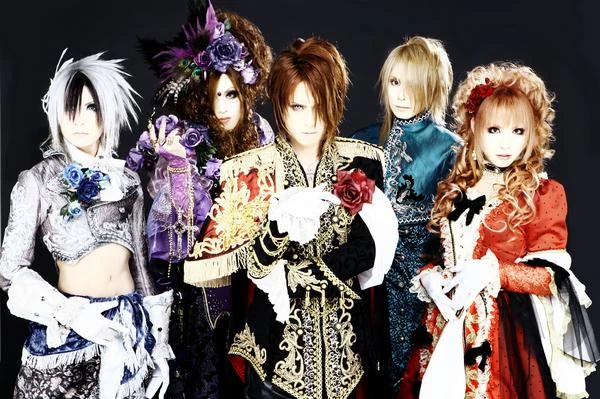
The band above is Versailles, one of the most popular tanbi kei bands. While they are no longer active as a group, the vocalist Kamijo, is still participating in solo activities and still engages in the tanbi kei style. Aside from the classical European-influence in their clothing, their music also mixes classical instruments, such as the violin, with rock and metal styles for a very distinct sound.
The neo-visual style mixes kote kei and oshare kei with milder, more fashionable looks. Their music is more mainstream and framed in a more aggressive, live-oriented band sound. This style peaked in the mid- to late-2000s and some of the most popular and well-liked visual kei bands fall under this category. A great amount of emphasis is put on engaging the audience during live performances. Audience members participate in what is known as furitsuke, which are choreography such as hand movements and head banging that the audience does in unison during the performance. Some bands that fall under the neo-visual style of visual kei are the GazettE, Alice Nine, and nightmare.

The last most popular form of visual kei is known as soft visual. This usually refers to bands that were originally old-school or tanbi kei bands that gradually toned down their looks and sound after gaining popularity. This is not an uncommon trend, since a lot of bands, especially after a couple of years, do not dress as elaborately or wear as much makeup as they initially did when they debuted. Most of the bands that are considered soft visual do not look or really sound visual kei, but are usually linked to the style because of a member’s former band or they type of live houses at which they usually perform. Janne Da Arc and LUNA SEA are examples of soft visual bands.
While visual kei does refer more to appearances than sound, visual kei bands definitely have a kind of sound that is linked to the genre. Perhaps that is the beauty of visual kei. Visual kei is a style where both looks and sounds can be incorporated and manipulated by bands, where no two bands will emulate the same exact style. The great amount of diversity within visual kei is also what ties all of it together.

No comments:
Post a Comment